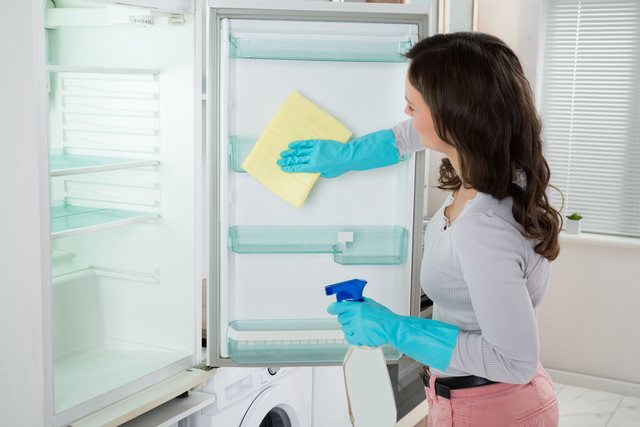
Refrigerator cleaning requires you to take turns. Empty it first, clean everything and then put the food in the right place, which is not always what you know. This article explains everything.
Step One: Empty and clean
Empty the refrigerator. Remove all products and discard expired ones.
Clean the grill. Take all the shelves and the inside out and prepare a paste with half a baking soda and half hot water and apply it with a toothbrush on the corners and on the shelf bars. You should mix the pastry well. Rub all sides with a sponge soaked in warm soapy water. Rinse and wipe.
Clean the layer below freezing. If the fridge has a part that goes down the ice compartment, soak it in warm soapy water for a few minutes, rub with sponge and then rinse.
Clean the dust. Put the vacuum cleaner brush on, or take a simple brush and clean the powders behind the fridge. Wipe the grill, especially down, with a dry cloth to remove the sticky dust.
Step Two: Reset
Eggs stand best where the temperature is most stable, on the middle rack. Keep them in their cartons, do not place them in the refrigerator holder.
The milk should sit up or down, depending on the fridge, closer to the ice part, where it is colder.
Yogurt, yogurt sauce and cottage cheese are better on the top shelf for the same reason. Return to the position that lets you easily retrieve them and where expiration dates are visible.
Packaged meat should sit on the coldest shelf, needless to say. And if it drains, not all the refrigerator will get dirty.
Vegetables stay longer if there is little moisture. The places that the instructions say have a lot of moisture are the right places. Put in their original packaging or in an air-free plastic bag inside.
Fruits should stick in the basket with a little moisture. Keep in original packaging or in plastic bags, with no air inside. Citrus fruits can be left without a bag.
Tip: Do not wash vegetables and fruits until used. Water can help mold because bacteria can grow out of excess moisture.
Meat products should stay on a separate shelf for them, but if missing, decide on the shelf closest to the fridge that is cooler.
Butter and soft cheeses do not need a very low temperature, so they can stick to the door of dairy products at the door, the warmest part of the refrigerator. Put soft cheeses like Brie or goat cheese in a box after you have opened them.
Sauces usually have a lot of vinegar and salt, which are natural preservatives. So ketchup, mayonnaise and salad dressings are very good at the door. Even the pickles and jars of tomato sauce. Olives and oil may stick in the closet, but sesame oil and walnut oil in the fridge again at the door.
Orange juice can be kept at the door if it is pasteurized. The squeeze should be kept at the top or bottom, depending on the type of refrigerator where it is cooler.
Tip. Always fill the refrigerator. They need a thermal mass, which means many products, to keep the refrigerator low. Cold foods and beverages can absorb warm air when you open the door. If you're the type to eat out or if the fridge is too big for your lifestyle, put in a few bottles of water.