

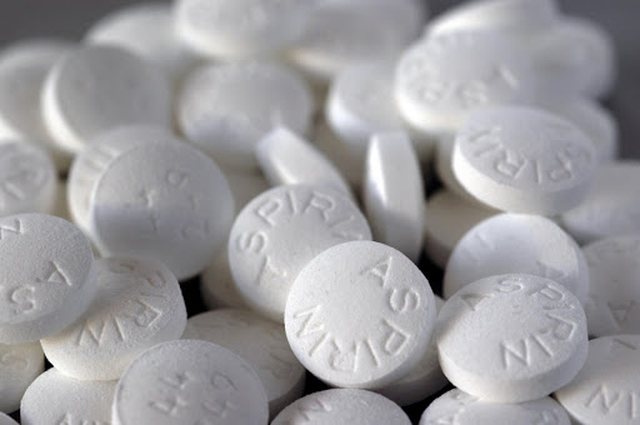
Patients with coronavirus in British hospitals will be given aspirin as a test to find out if this cheap medicine can prevent deadly blood clots in the lungs. Several studies have shown that nearly 80% of people who die from Covid-19 have thrombosis, or blood clots in the lungs, which prevents oxygen from moving through the body and can be fatal.
Scientists hope that blood thinners, such as aspirin, can help avoid the devastating clot that can lead to death. If proven to be effective, it would be the first over-the-counter drug that is found to have an effect on the coronavirus.
Professor Peter Horby, from Oxford University, who is reviewing some medications and treatments, said aspirin was added to their list this week.
"Aspirin is a very available, cheap drug and if it worked, it would be a big boost to treatment. "Anti-clotting drugs are an area where we have had a gap."
Research published late last month by the University of Maryland in the U.S. found that coronavirus patients taking a low-dose daily aspirin to protect themselves from cardiovascular disease had a significantly lower risk of complications and death than those who had not used this medicine for any reason.
Aspirin recipients were less likely to be placed in the intensive care unit or intubation.
However, because the US has not conducted a test for aspirin, the findings are observational only and it is still unclear whether giving aspirin more broadly would be beneficial.
Plasma made from the blood of coronavirus survivors contains powerful antibodies that can fight disease. Britain is conducting the world’s largest recovery plasma test and has so far registered 3,000 patients, half of whom will be given treatment.


