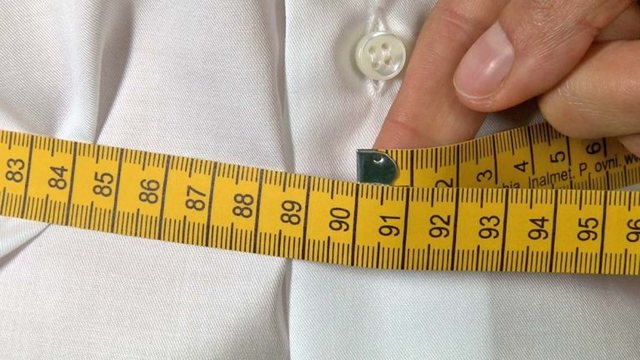
Recent medical studies show that adults with large waist sizes are at much greater risk for serious health problems.
Studies show that their levels of coping with serious illnesses are much higher than in people with normal waist sizes.
In fact, a medical study comparing data from 650,000 adults found a large drop in life expectancy comparing waist circumference in overweight women and men compared to those at the right weight.
The study organized by the World Health Organization accurately showed that high waist circumference and overweight cost three years shorter life for men and five years for women.
This effect was independent of other risk factors, such as age, body mass index (BMI), physical activity, smoking history, and alcohol use.
What should be the waist circumference?
Specifically these data showed that men with a waist circumference beyond 110 centimeters face a 50 percent higher risk of death than men with a 94 centimeter waist.
In women, those with a waist beyond 94 centimeters had an 80 percent higher risk of serious problems than women with a waist of 70 centimeters in circumference.
Large waist circumference is a significant indicator of the presence of excess abdominal fat. AgroWeb.org reports that the latter is also related to other problems associated with overweight or obesity.
These include serious problems such as type 2 diabetes, high cholesterol, high triglycerides, high blood pressure and coronary artery disease.
Do you know the limit of your waist?
Here's how to measure it. Find the pelvic bone in your hip.
Place the beginning of the meter there and stretch around your body.
The strain of the meter should be complete, but without tightening it to the skin.
Release the breath and read the measurement.
If you do not like the number you see, do not lose courage.
Maximum figures should be 94 centimeters for men and 70 centimeters for women.
But if you are physically active and eat well, you will be able to reduce your waistline and improve your overall health.