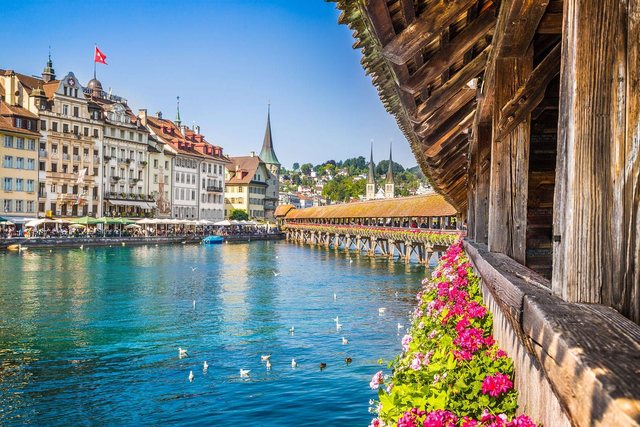
Europe's iconic and beautiful bridges encompass all styles, shapes and sizes. They are made of wood, stone, iron or steel. Cascades of flowers wear their sides.
The artwork adorns some of them by inviting visitors to stroll along the river while enjoying world-class paintings and sculptures.
While the reason for their existence is to provide a passageway over water, these bridges also have a fascinating history that hides behind them. They have been the site of battles, fires, bombings and restorations. The stories of some European bridges date back many centuries.
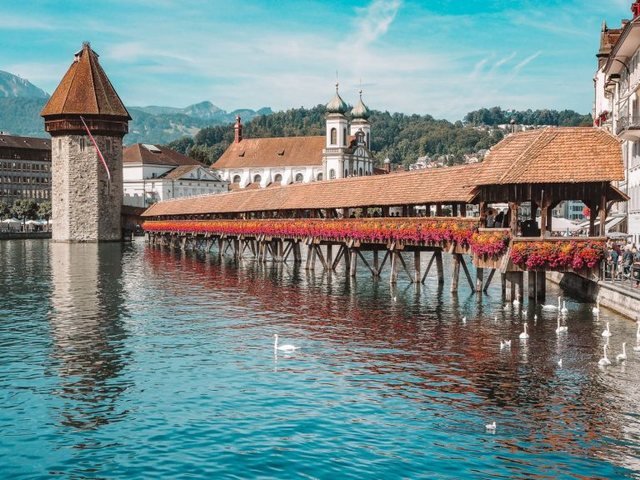
1. Church Bridge, Lucerne, Switzerland
This beautiful bridge is a tourist attraction. The Church Bridge and its tower are symbols of Lucerne and Switzerland. Also known as Kapellbrücke, it was built in the 14th century and is the oldest wooden bridge in Europe.
Built downtown, the Church Diagonal Bridge connects the north and south banks of the Reuss River. Colorful flowers hang on the sides of the bridge 700 meters long.
The Church Bridge was engulfed in a massive fire in 1993. Only the tower and the ends of the bridge survived. The Swiss people, heartbroken for the destruction of their national treasury, raised funds and restored the bridge about a year later.
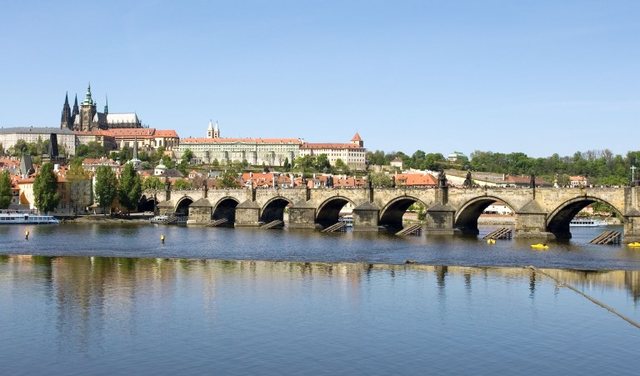
2. Charles Bridge, Prague, Czech Republic
Charles Bridge has been the only connection between Prague Old Town and the Castle located on the other side of the river. It is the oldest bridge over the Vltava River in Prague. Today, the Charles Bridge is one of the most visited spots in Prague, also for the magnificent views of the city that it offers on both sides of it. When floods damaged the original bridge long ago, a new bridge was built in 1402. Later it was named in honor of Charles IV, who oversaw its construction.
The history of Charles Bridge includes frequent floods, battles, beheadings, and numerous saints. Between 1683 and 1928, 30 statues of saints were built to decorate the bridge, the most famous of which is the statue of Saint John Nepomuk. Some of the first statues have been lost over time.
What you see today are copies of them, the originals are in a nearby museum. More than floods and battles, the bridge has "suffered from the constant traffic of horse-drawn carriages" (and later trams, buses and cars). After a much-needed restoration in 1978, all vehicle traffic was halted.

3. Old Bridge, Heidelberg, Germany
Built on the Neckar River, the arched bridge is one of the latest examples of a classic stone bridge. The previous eight bridges over the river, all built of wood, have not withstood the test of time. So in 1780, Prince Karl Theodor ordered that this strong bridge be built.
Many bridges in Germany were destroyed during World War II, but the Old Bridge remained undamaged. This is probably because the Allies planned to rescue Heidelberg to use as a post-war base.
Travel Awaits/ Monitor