Now that we are in the middle of the cold season and the viruses, we must take more and more care to avoid the worst virus we have ever fought. The cause for it is also our exposure to many microbes in the midst of the Covid pandemic.
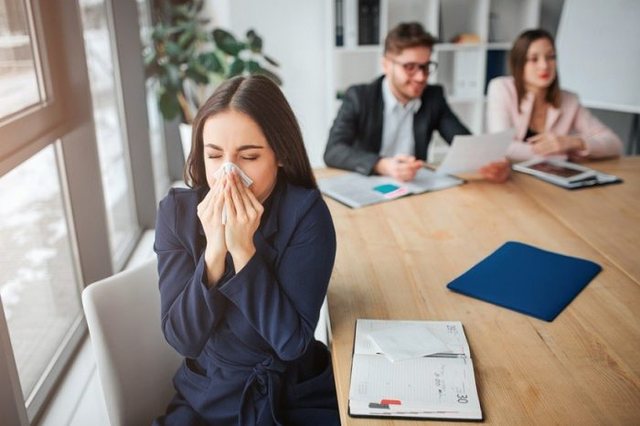
In fact, at this time, there is a serious social taboo about sneezing in public or near people.
It is common and polite to 'choke' the sneeze or aim to hold the elbow, but currently experts say you should be tested for Covid if you have sneezing.
In fact, if you are in an environment with people and "dare" to sneeze, you run the risk of being ridiculed or glared at.
However, although it is rare, according to experts, you risk serious injury if you keep sneezing - which tries to come out at speeds of up to 100 kilometers per hour.
Doctors cited the case of a man in Britain who had cracks in the back of his throat after holding sneezing. The 34-year-old had suffered extreme pain and could barely speak or swallow.

Discussing the unusual case in 'BMJ Case Reports', ear, nose and throat specialists at Leicester NHS Trust University Hospital warned: "Stopping sneezing by blocking the nose and mouth is a dangerous maneuver and should be avoided with any condition".
" It can lead to serious complications, such as pseudomediastinum (air trapped in the chest between the lungs), rupture of the tympanic membrane (perforated ear drum), and even rupture of a cerebral aneurysm (rise of blood vessels in the brain ). "
Failure to release all the pressure may indicate that the nose and throat are carrying the full load.
If you continue to hold the sneeze, you may end up even cracking the eardrum, as the trapped air trying to escape is diverted somewhere in the tube connecting the ear and the eardrum.
Experts also warn that pressure can cause hearing loss, other ear infections, which can turn into serious problems, but even collapse in the lungs.
The main purpose of sneezing is to get out everything that should not be in the nose. So if you redirect any germ-filled mucus elsewhere, you could end up in an infection bed.
Blood vessels can also be damaged by stopping sneezing, caused by the force of air blowing into the nose, eyes or even the eardrum.