We're all used to hearing a simple "sorry" and think that's enough. However, "sorry" doesn't have to be just one word, and your child needs to understand that.
It is important to teach children to apologize because they will learn to care more for others. This is the right way to teach them.
1. Apologizing does not solve the problem
If you force children to say "sorry", you will not teach them anything and will only annoy and embarrass them. Some do not have the ability to feel remorse, so the conversation will not be sincere. Nothing will be resolved if they don't understand why they need to apologize. This gives them a way out without having to face the consequences of their actions.
You need to let the child understand what they did wrong and what needs to be changed in their behavior. If the child hurts someone, try to present the situation in a way that will make him want to help the hurt person.
The child will feel better after apologizing and admitting the mistake, knowing they can make things better. Feeling does not necessarily have to be verbal. It can also be a hug or an act of kindness.
2. Parents can help children to apologize properly
If you saw the collision, tell the child exactly what happened and how the other child was hurt. If you haven't seen it, ask your child to show you. Then describe what you see in the child. Be considerate and ask the injured child if he is okay or if he needs anything.
Then it's time for your child to make things better. You can ask them to clean up the mess they made or get the first aid kit. Finally, make sure they promise you it won't happen again.
3. There are many things that should be part of the expression "I'm sorry".
a. “I'm sorry for…” Your child needs to tell the person who hurt them that they understand what they did and why it upset them.
b. “It's wrong because…” This can teach your child to see things from another person's perspective. Understanding the feelings of others can change the way of behavior and prevent wrong actions that the child may do in the future.
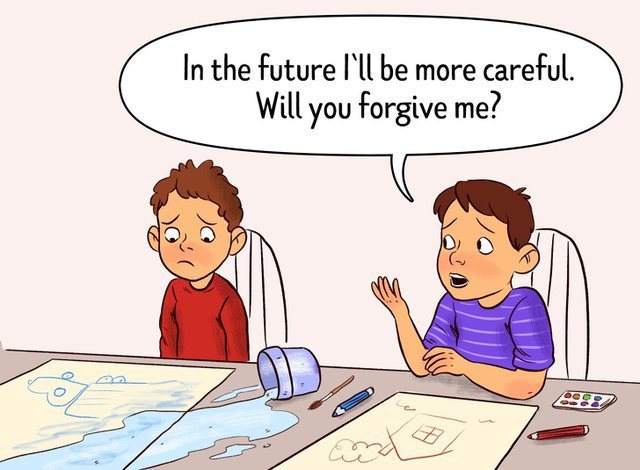
c. "In the future, I will..." It is important for the hurt person to know that they will not be hurt again in the future. Therefore, they will feel better if they hear your child promise to behave better next time.
what "Will you forgive me?" Although there is no guarantee that your child will be forgiven, they should still try to apologize. This shows that they want to maintain their friendship with the person and that they need to get permission to be their friend again. This is the way to act, instead of assuming that everything is fine while the friend suffers.