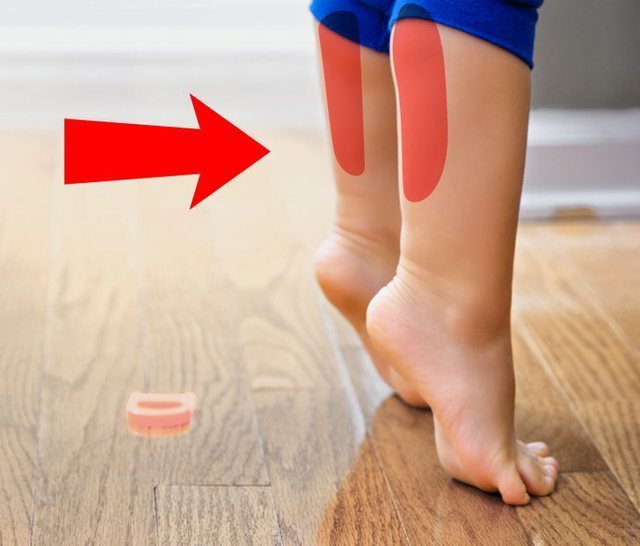
Tiptoeing may be normal for children aged 12-15 months as they try different foot positions. In general, tiptoeing is nothing to worry about until the child is 2 years old. In addition to discovering ways of moving, tiptoeing can become a habit in children, who continue to do it over and over again. Usually, they stop doing this by age 5.
However, due to various reasons, tiptoeing may still be common in older children. But why do they keep tiptoeing?
It may be a special condition
If your child continues to tiptoe after age 2, it may be necessary to see a doctor. Check the child's legs first to see if they have strong leg muscles, or if they have difficulty with coordination.
The cause may be muscular dystrophy
This is a genetic condition that can be diagnosed by checking a child's leg muscles. In this case, their muscles are usually weak.
An abnormality of the spinal cord
This can cause restriction of movement of the spinal cord. It occurs when the spinal cord is attached to the tissues around the spine such as at its base, for example.
As a result, as the spine grows, the spinal cord stretches and nerves are damaged. This condition makes it difficult to walk straight and causes pain. The child should be checked by a doctor immediately.
Cerebral palsy
Walking on tiptoes can be caused by cerebral palsy. In this case, the child also has weak muscles, has problems keeping the body straight and walks unsteadily.
Just a habit
This happens when a child is absolutely healthy, but for some reason simply refuses to walk normally and prefers to walk on tiptoe. This may be the result of a simple habit that they cannot get rid of. This condition affects anywhere from 5% to 12% of healthy children.
Please note that this article is for informational purposes only and you should always consult your doctor!