Technology is becoming a natural part of our lives, and this is now reflected in the way we build and live in homes. Interior design is merging with digital intelligence, creating environments that are no longer just functional, but also sensitive to human needs.
The home of the future is no longer a static space. Sensors for light, temperature, and air quality are giving the environment the ability to “understand” the rhythm of its inhabitants. Lighting adapts to the time of day, the heating system reacts to presence, and smart furniture can change position or lighting for greater comfort.
This new approach called "smart living" is not only about comfort, but also about well-being. A space that regulates its own lighting, maintains the ideal temperature, and takes care of air quality creates a balance between technology and human health.
The aesthetics of these homes are not lost. On the contrary, technology is elegantly hidden, becoming a natural part of the design. Classic buttons and controls are replaced by voices, gestures or algorithms that learn the user's habits over time.
Essentially, a smart home is a space that reacts and coexists with you. It is no longer just a place to live, but a system that learns, adapts and improves the quality of life.
Thus, technology does not replace humans, but understands them and makes everyday life simpler, more comfortable and more human.
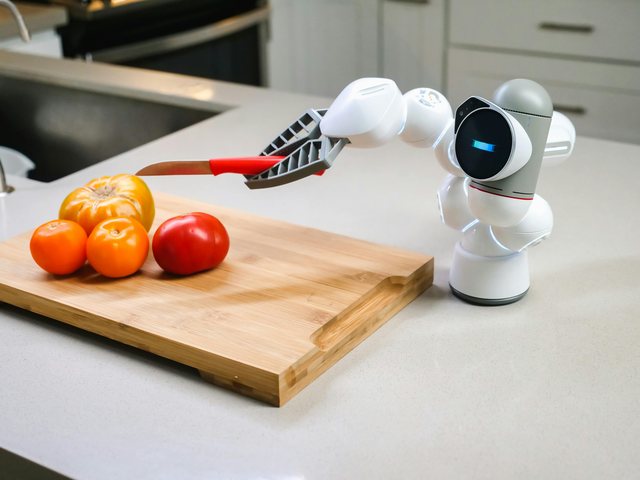
Photo by Kindel Media: https://www.pexels.com/photo/a-clicbot-about-to-cut-a-tomato-using-a-knife-9028921/