In the Netherlands, large windows in houses are not just an architectural detail, but a part of cultural identity. Since centuries ago, they have had a deep moral meaning: whoever has nothing to hide keeps their house open to the eyes of passers-by. Thus, large windows have become a symbol of honesty and honest living.
The tradition originated in the 17th century, during the Dutch Golden Age, when the country became one of the richest centers of Europe. The Protestant society of that time preached simplicity, transparency, and pure morality. Wealthy families did not want to be accused of arrogance or secretive living, so they maintained their honesty by clearly showing their lives through large windows, without curtains or obstacles. Passersby could see the interior of a neat, clean, and quiet house, as evidence of a moral life.
Even though society is more modern today, this custom has been proudly preserved. In many Dutch cities, from Amsterdam to Rotterdam, you can see large windows that open onto the street, often without curtains, allowing light and the outside eye to freely enter. This is not seen as a lack of privacy, but as a sign of trust and openness to the world.
Cultural psychologists explain that this approach reflects the frank and direct nature of the Dutch. They value honesty and clarity in relationships, both in private life and in society. A large window, in this sense, is a reflection of their values: bright, open and without secrets.
At a time when many countries are increasingly demanding privacy and closure, the Netherlands reminds us of a simple but powerful idea: transparency builds trust. And perhaps, through its large windows, this country teaches us that honesty is not just a personal virtue, but also a way of life that illuminates the entire society.
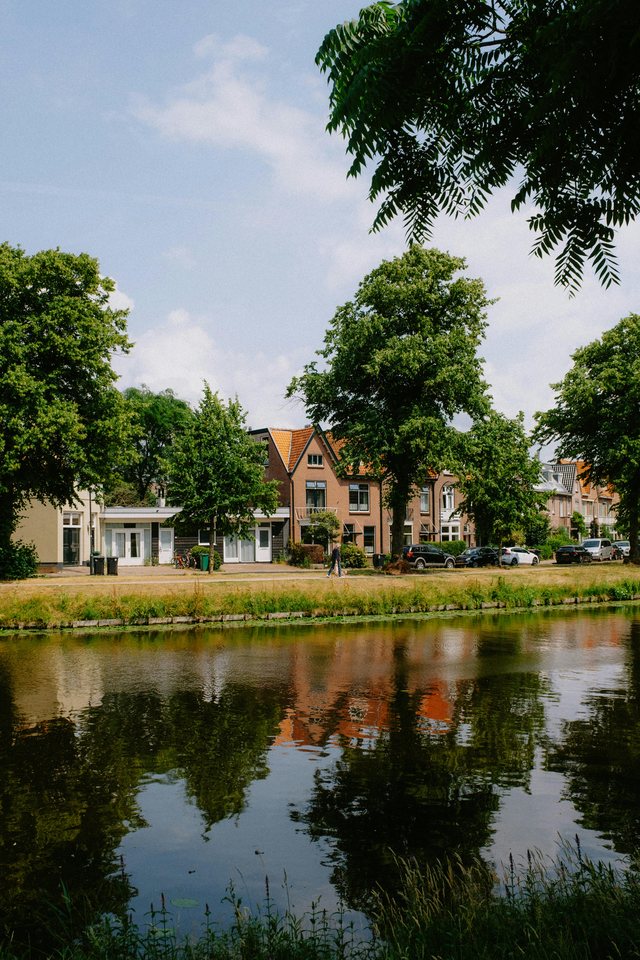
Photo by Mathias Reding: https://www.pexels.com/photo/trees-reflecting-in-pond-in-summer-18026556/