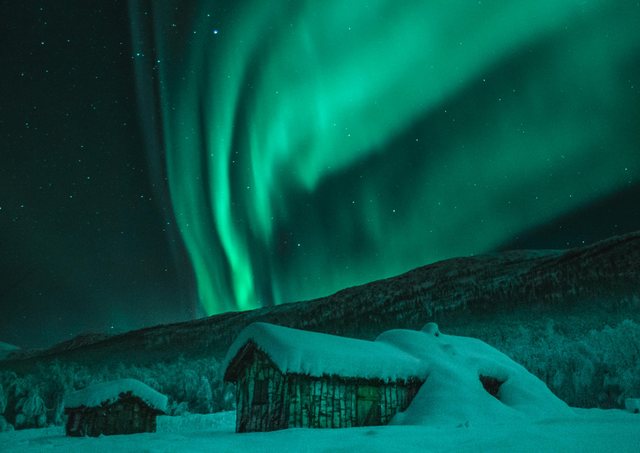
In the remote Arctic of Norway, lies Longyearbyen, a small and extraordinary town on the Svalbard islands. There, the law prohibits something that seems impossible: dying. The reason is not philosophical, but entirely scientific and practical. The permafrost of the ground makes it impossible for bodies to decompose, preserving the dead human body almost intact for decades.
This feature was discovered in the middle of the last century, when researchers noticed that bodies buried in the city's cemeteries had not decomposed even after many years. In some cases, traces of old viruses, such as the Spanish flu of 1918, were even found in the frozen bodies. This raised concerns about the risk of possible epidemic outbreaks if the cemeteries were reopened.
For this reason, Norwegian authorities banned burials in Longyearbyen. Today, no one can be buried there, and if a resident dies, the body is transported to other parts of Norway to rest in warmer soil. Also, people suffering from serious illnesses are advised to move to the mainland for treatment, as the town has neither large medical capacities nor conditions to cope with natural decomposition.
Longyearbyen is one of the northernmost settlements in the world, with around 2,500 residents from more than 50 countries. Its climate is harsh and the winters are long, with months without sunlight. However, the town remains a special place, where life develops on the borders of nature, and the law on the “no death” has become a symbol of this strange relationship between man and ice.
In this white city, where life and death have taken on other meanings, man faces the deepest paradox of existence every day: in a place where everything remains frozen, life continues to move forward with a human warmth that defies the ice.
Photo by Tobias Bjørkli: https://www.pexels.com/photo/aurora-borealis-1674624/